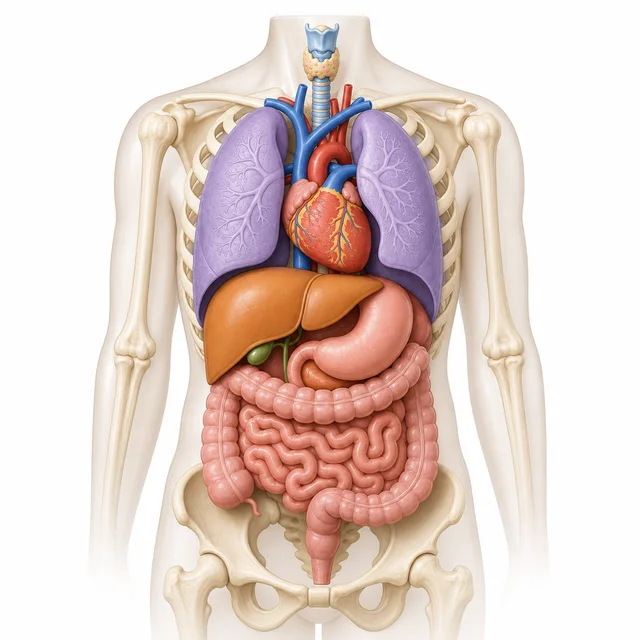
Locatein situ
Start with the body system and the clinical setting, and meet every word inside a real structure. Context makes the meaning stick.
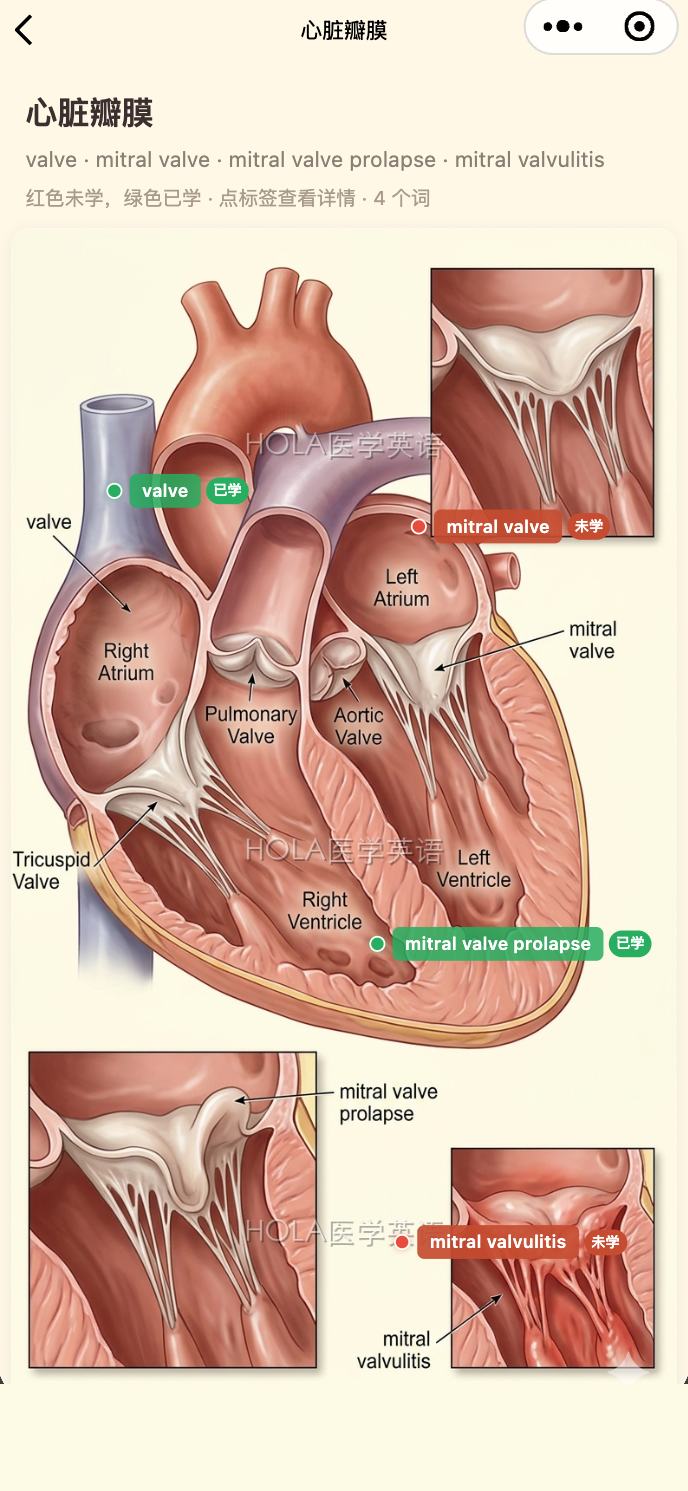
Cardiovascular system · heart valvesmitral valve
See the organ, and the word comes back.
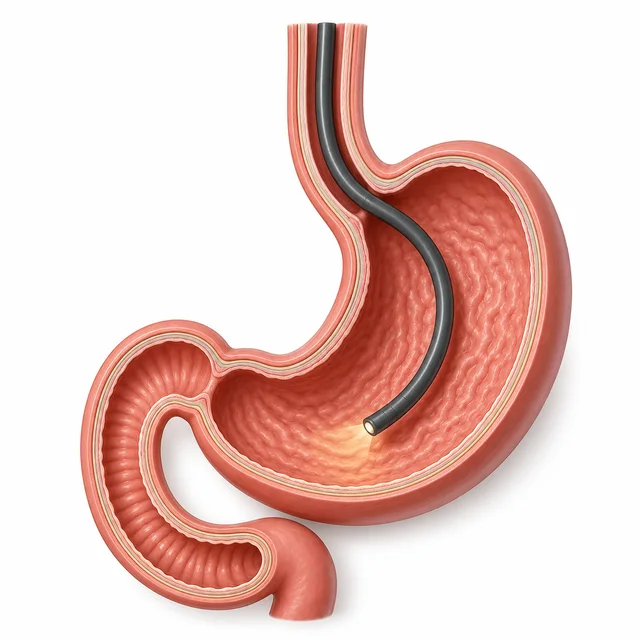
Esophagogastroduodenoscopy is 26 letters long, but it's built from just four parts. Learn around 300 common roots and you can read tens of thousands of medical terms on sight. That's exactly the skill the METS exam tests.
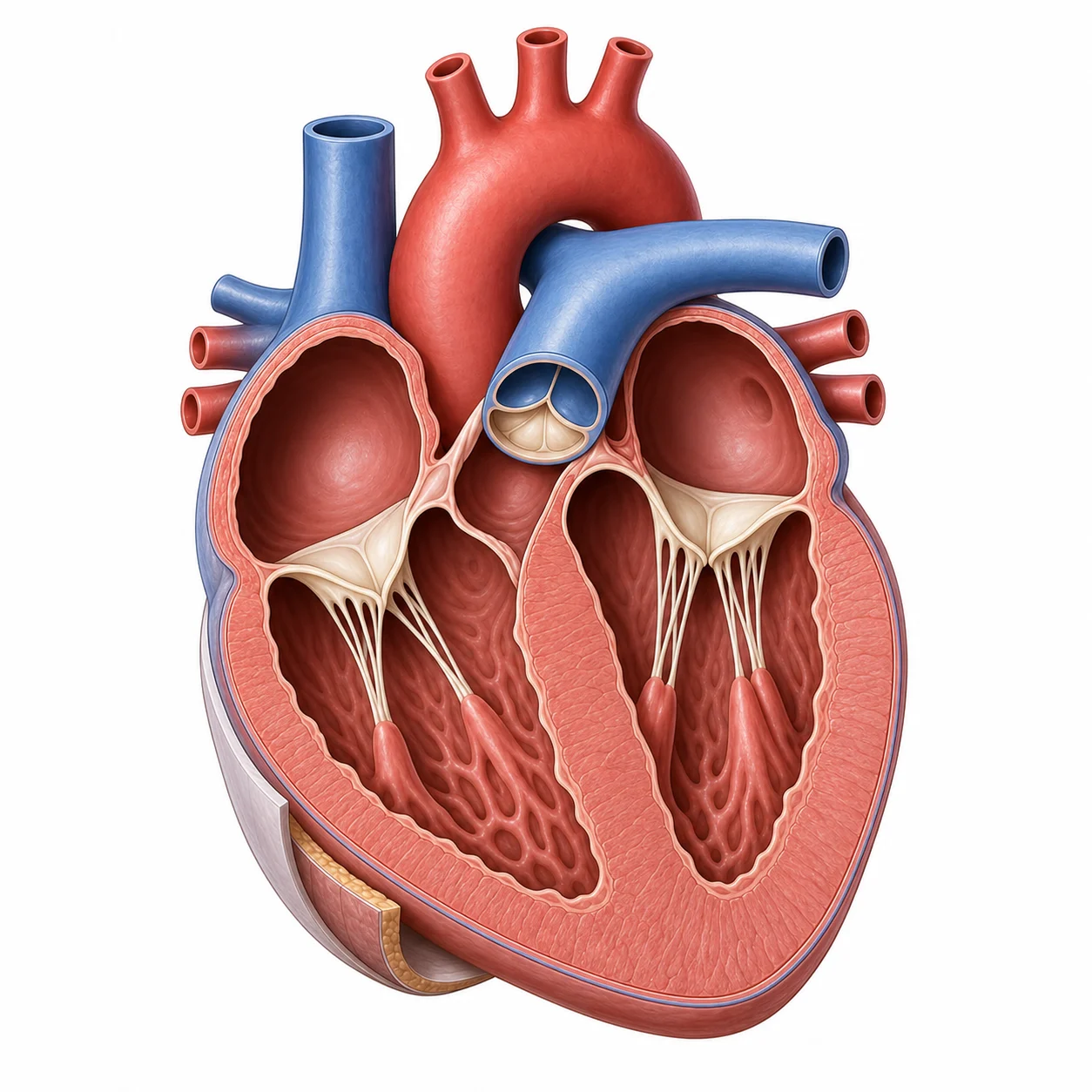
One heart, eight terms. Hover over any label to open its entry card.
Click any word above to see how it breaks down. Once you have seen the structure, you'll recognize it the next time you see it.
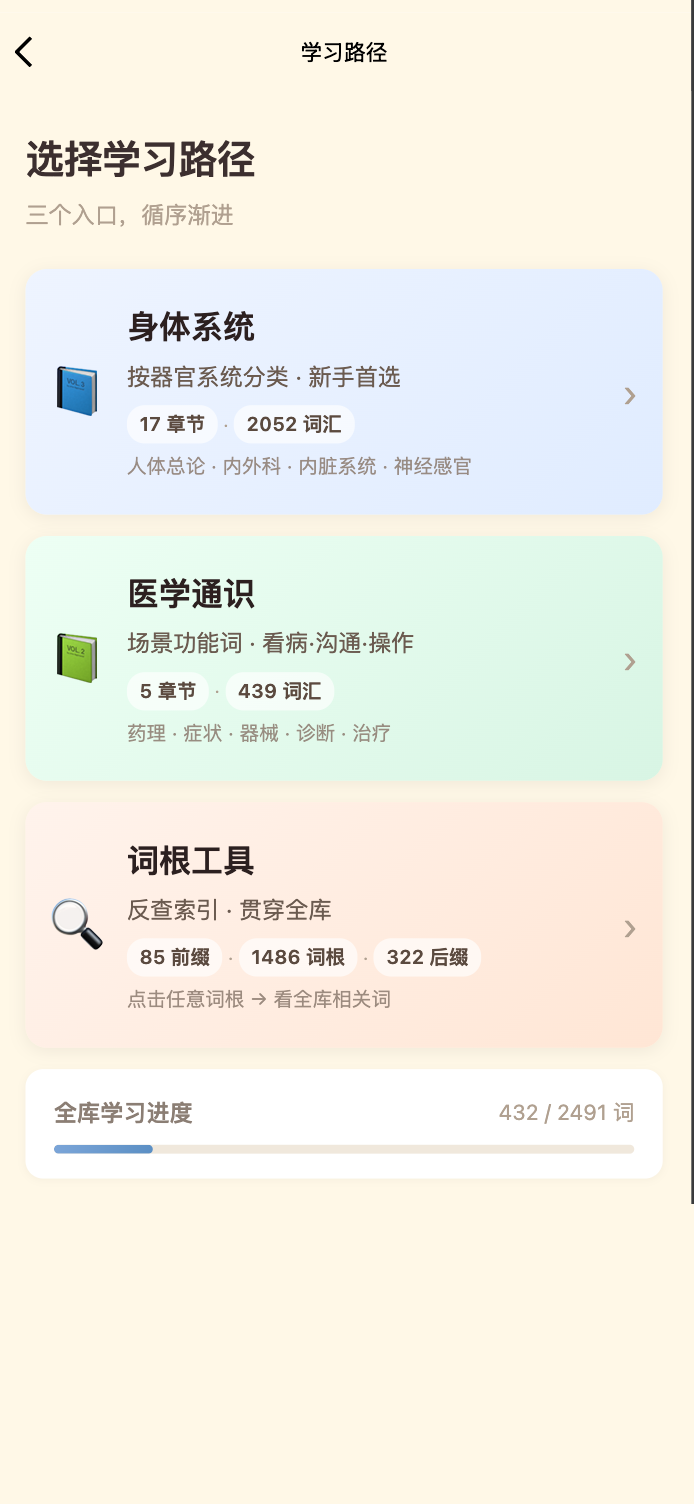
Meet the term where it lives in the body, break it down, review it on schedule, then organize it around your specialty and your exam. One cycle takes a term from "I've seen it" to "I can use it."
Start with the body system and the clinical setting, and meet every word inside a real structure. Context makes the meaning stick.
See the organ, and the word comes back.
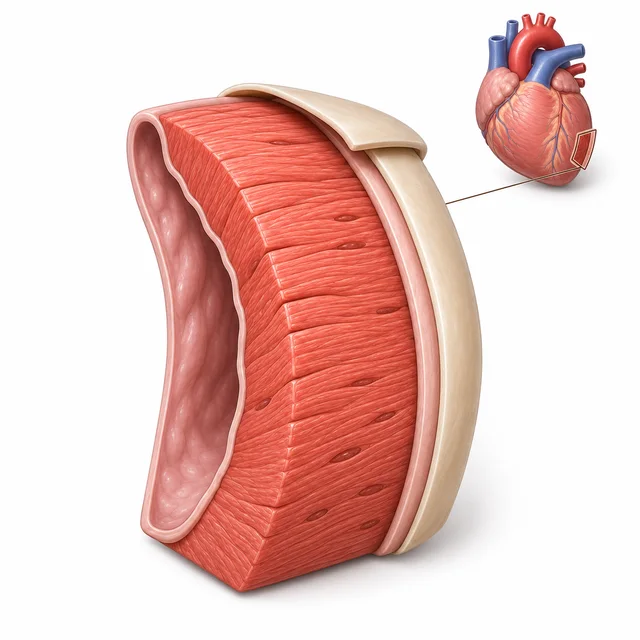
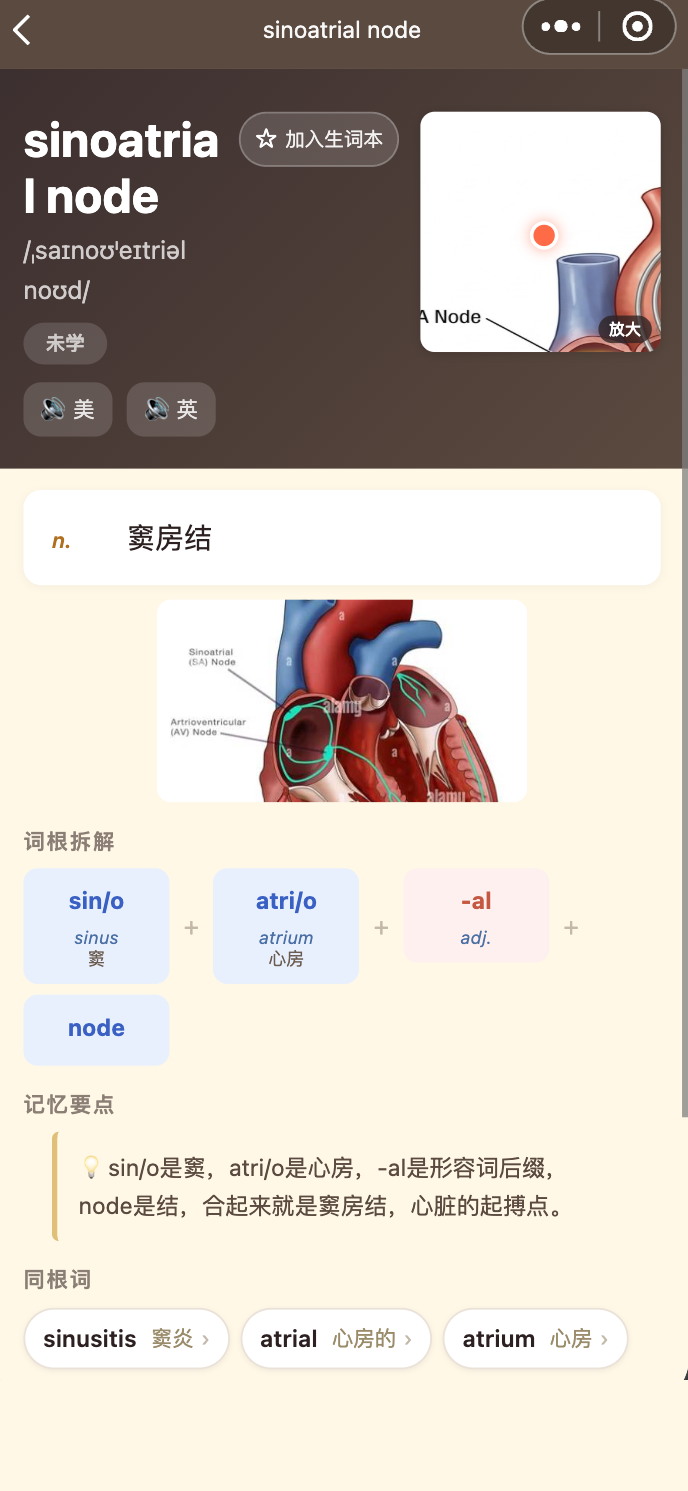
See the prefix, root and suffix side by side, then put them back together. Once you've broken a word down, you'll recognize the pattern next time.
Read long words you have never seen before, on the spot.
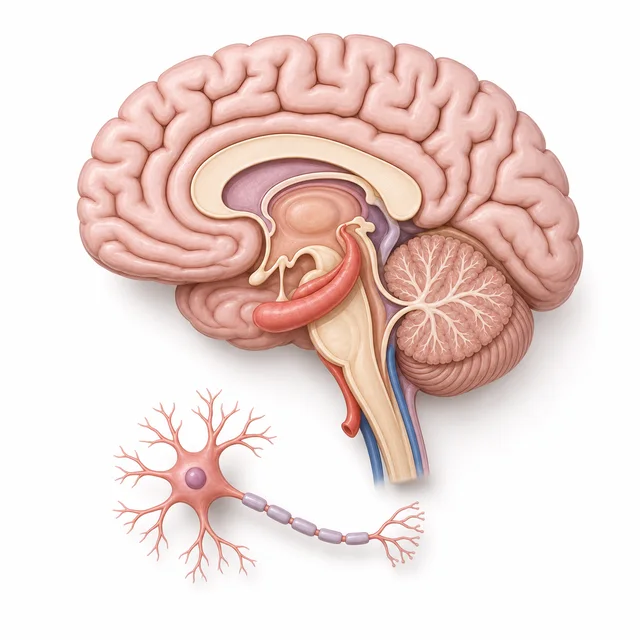
Reviews follow the forgetting curve. Every word gets a scheduled return date, from first encounter to active recall.
No cramming before the exam. The words are already yours.
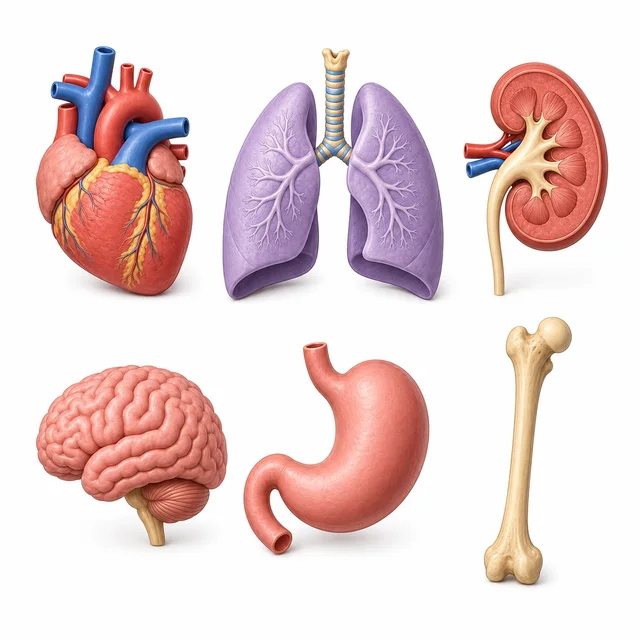
Build word lists around your own goals. Import terms from a conference agenda or a ward rotation, and the app breaks them down and builds the flashcards.
Word lists built for your exam and your department.
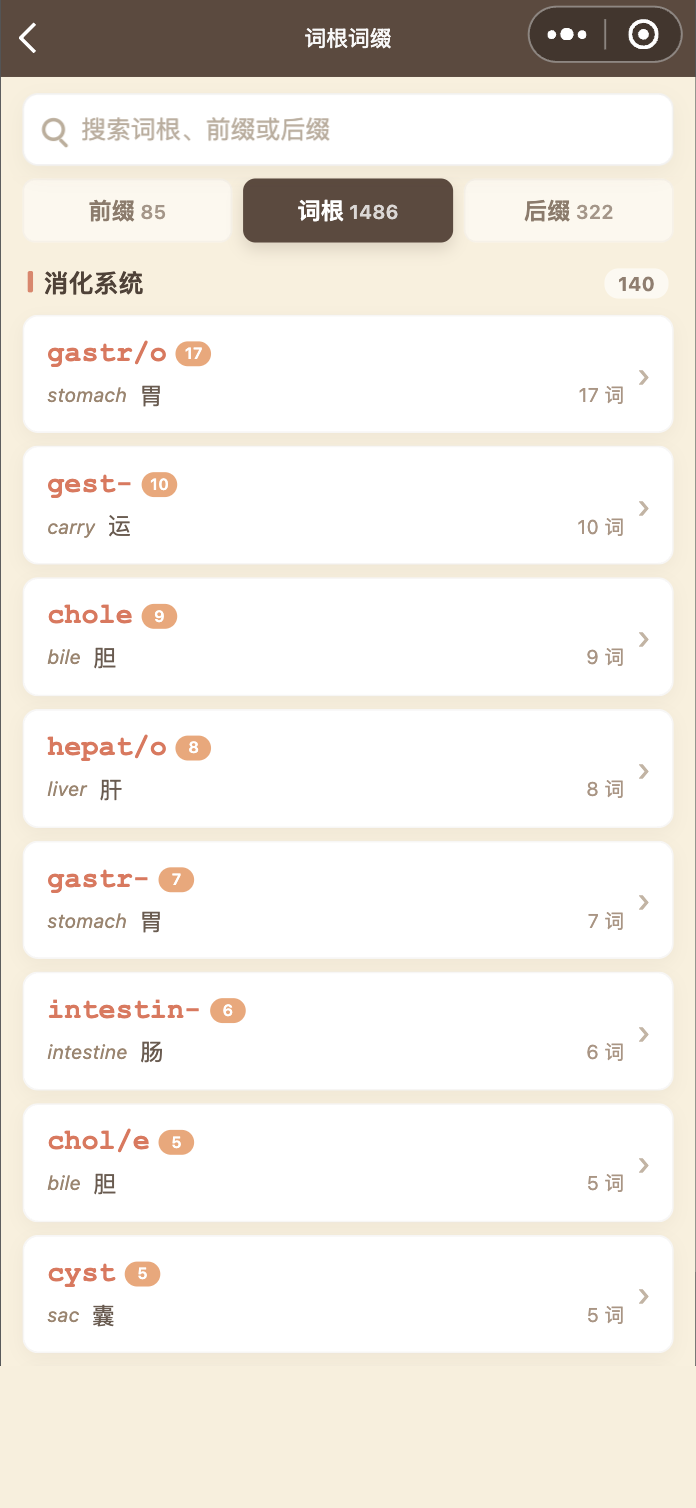
Medical English is built from parts. The same root appears in dozens of terms, so once you know it, you know them all. The library holds 1,486 roots like this.
Master around 300 high-frequency roots and you can break down tens of thousands of medical terms. The METS exam, reading papers, writing case notes in English, following conference talks, working with colleagues abroad: one skill covers them all.
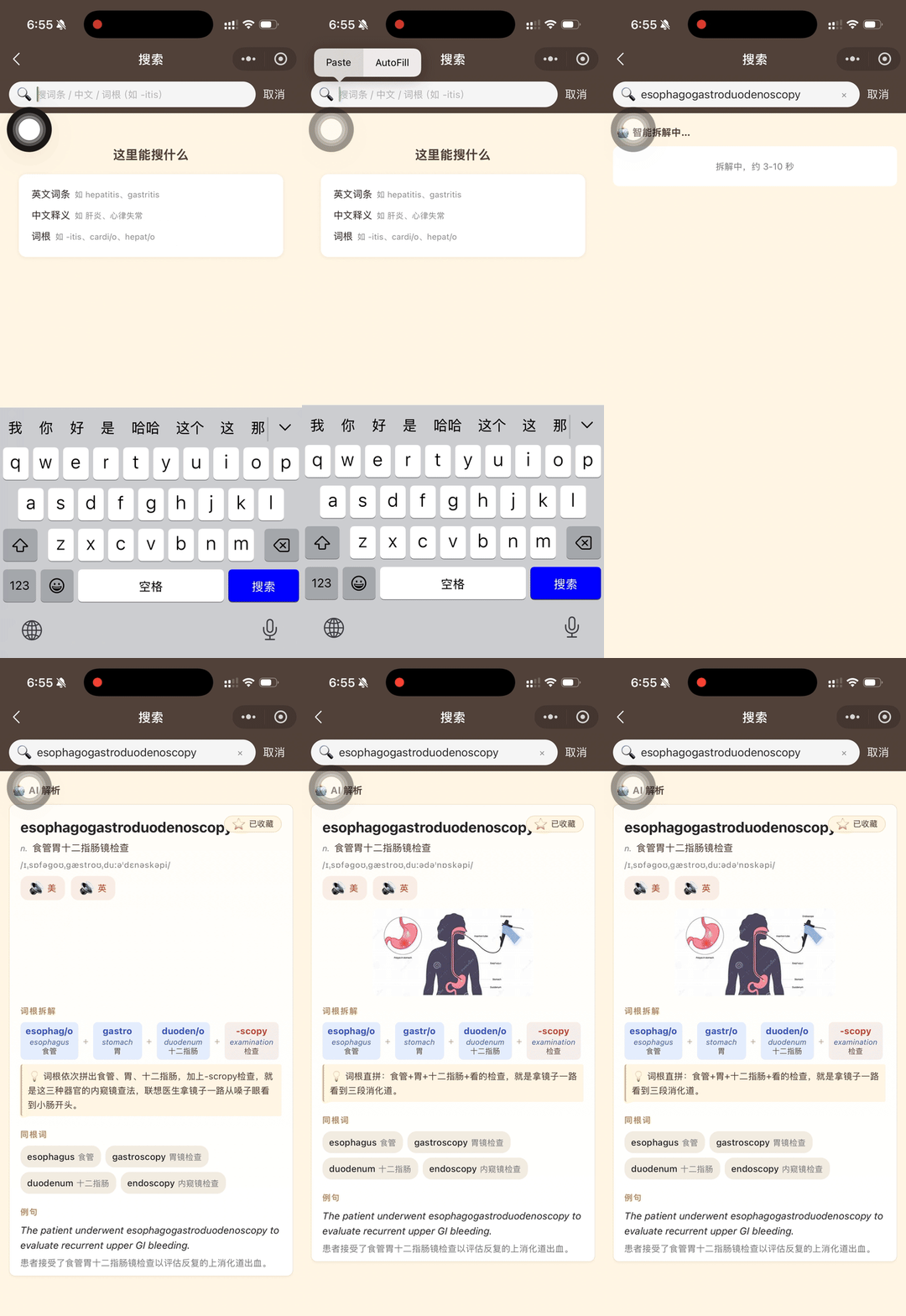
Look it up, break it down, see it in context, review it.
Every lookup becomes a lesson in how the word is built and which family it belongs to.
Take esophagogastroduodenoscopy. See each part in turn and the meaning follows: endoscopy of the esophagus, stomach and duodenum.
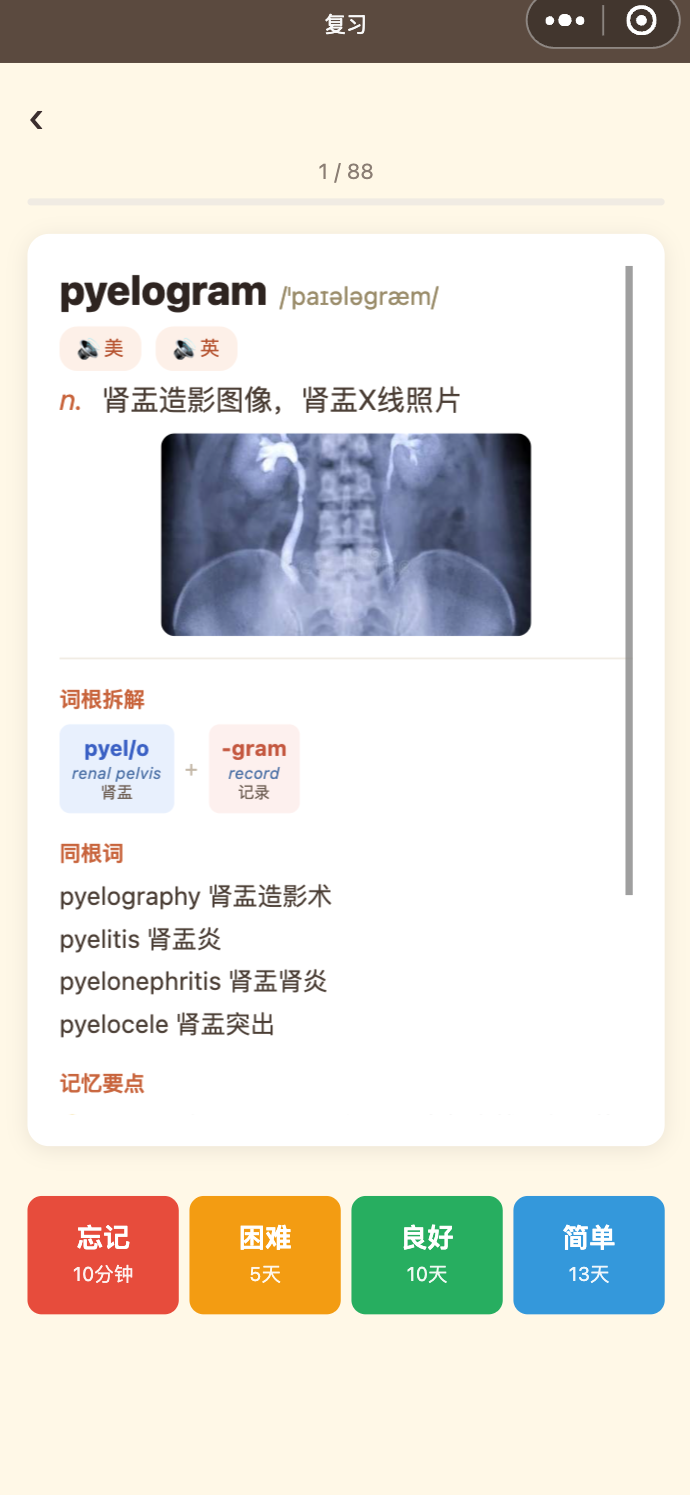
Medical English Terms (METS), known in China as METS词根记, is a medical English learning system designed for the METS exam and for clinical English, built for medical students, doctors and other health professionals.
Understand how a word is built and it's yours for good: faster reading, more precise notes, and no panic when an unfamiliar term turns up in the exam.
Scan the code in WeChat to open the mini program. Your progress syncs across devices. Start today, and terminology will be your strong suit by the next exam.